Showing posts with label black lives matter. Show all posts

Thursday, August 17, 2017

Hate Doesn't Wear Hoods Anymore

Hate doesn't wear hoods anymore.

Hate wears polo shirts and khakis. 

Image result for charlottesville polo shirts

Hate says it is simply proud of its European ancestry, despite not knowing its ancestry

Hate equates Black Lives Matter with White Supremacy. 

Hate equates the KKK with Black Panthers. 

Hate says the confederate flag is just about southern heritage.

Hate claims reverse racism is a bigger problem than racism.

Hate says, "I just don't know why those people are always so mad."

Hate says, "they say that word all the time why can't I say it?"

After a terrorist attack, Hate says, "there is violence on many sides. Many sides."

Hate portrays itself as a victim.


Hate sits next to you in Algebra.

Hate sits next to you at the office.

Hate is in your family.

Hate wears a red cap.

And sometimes hate still wears the swastika. Fucking Nazis. 

Hate says "it's just a joke" when its views and claims are challenged.

Hate builds walls instead of bridges.

Hate hides right underneath the surface.

Hate isn't always easy to spot, yet

Hate can't be ignored.

Hate doesn't care that you take the high road.

Hate is fueled by the silence of good people.

Hate has never been properly confronted because many prioritize comfort over equality.

Hate is fueled by moderation.

Hate feeds off "negative peace, the absence of tension."

Hate refuses to seek "positive peace, the presence of justice."

Hate is more dangerous with a smile on its face.

Hate must be confronted in all its forms, from the literal Nazi, to the patient who refuses to see a doctor of color, to the boss who skips over Mohammed's resume but has "a lot of black friends."

Love trumps hate but Trump-inspired hate is a powerful force.

Hate necessitates aggressively peaceful, loving actions.

Show love. Speak love. Teach love.

But remember: Hate is not defeated with platitudes.

Support the oppressed, the persecuted, the tired, the poor.

Hate has always existed and will always exist, but

Hate can be made weak and irrelevant.

Hate can be shamed.


Hate should be shamed.

And we should be ashamed if we let Hate prosper.

I Love You All...Class Dismissed. 

Tuesday, January 24, 2017

The Power of Protest

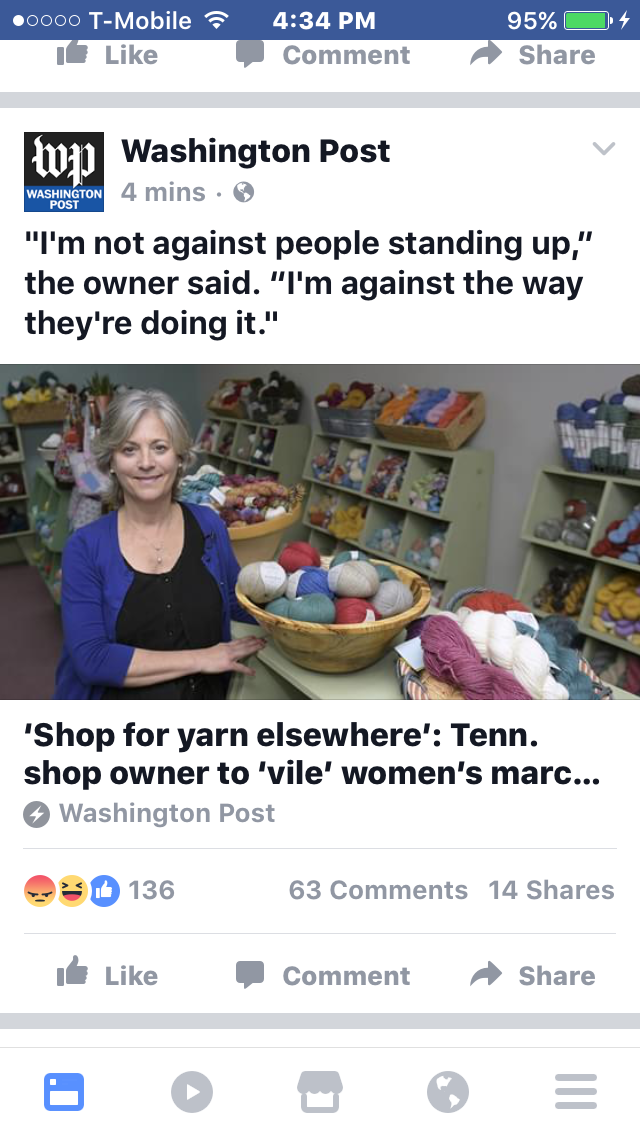
This past weekend saw the stunning, worldwide success of the Women's March.

Image result for women's march

The spirit of 60s protest has been revived in America over the past few years, starting in earnest with Occupy Wall Street and picking up steam after the killing of Trayvon Martin and subsequent release of his killer. Since then, there have been numerous national protest movements, largely directed at stopping police brutality. After the election of the charlatan-in-chief, protests have gone further mainstream, with celebrities and regular Americans showing up en masse to Saturday's Women's March. 

As much as it was a stand against Frump, it was also a sign of solidarity with women and women's rights. I thought it was great and I hope it continues. People shouldn't and won't simply forget the comments Trump and many of his supporters made (and continue to make) that are not only offensive to women, but all of humanity, as well as the very fabric of reality itself. Even more offensive are his policies, which will have a disproportionately adverse effect on women and children. 

Of course, not everyone feels this way. Which is fine! I appreciate alternative opinions (not alternative facts, those are simply lies, you Revolutionary War cosplayer) when they are informed by true facts and honest reflection. I also see the necessity of a conservative view in politics and government. Any healthy democracy has balance and dissent. I have strong opinions, and I voice them (or at least write them) for my own sanity and to maybe help someone else formulate their own opinion. I don't discredit someone's humanity just because of a certain opinion they may have, but I will fully and strongly support my own perspective, and I'm not going to change my mind to make anybody comfortable. There are certain opinions and ideologies that outweigh any bonds I may have with someone. I know all of my true friends don't agree with me on everything (in most cases it's just a matter of degree, in others it's a case of complete disagreement) but the issues we disagree on aren't vital to my humanity, such as the importance of equality and diversity. They wouldn't be my friends otherwise.

The Women's March was interesting because it was vague enough so that being against it would mean you're kind of against women. That was genius! Who could be against women? Plenty of people, apparently. Obviously, many Dump supporters were not too fond of it because they realized this was a rally against Dump, his comments, and his policies. I think a lot of Dump's female supporters (53% of white women voted for Dump) were a little perplexed because they wanted to support women but didn't want to oppose Dump, not realizing (or accepting) that supporting Dump is indeed opposing women. It was a bit of an existential crisis, and hopefully, it made them question their decision.

Some people genuinely didn't know what the march was about, but many would "inquire" about it in a not-too-subtle derogatory manner; usually not enough to be openly offensive, but with a clear intent of devaluing the protest. I saw many comments like, "Why are they doing it now and not before the election? Why don't they wait until laws are actually changed? Why don't they wait until some other arbitrary time that still wouldn't satisfy my bullshit complaints anyway?" I made that last one up probably, but the others were common. If these curious cats really wanted to know what it was all about, there were plenty of sources to find out. Instead, they would purposely troll people who attended or showed support with questions disguised as genuine curiosity or concern and really intended to distract from and demean the massive show of solidarity.

But those questions are the least of the concerning statements I saw. There was a lot of push back from mostly white men disputing that a women's march is even necessary. "America is the best country in the world for women!" Even if that were true, does that mean things can't get better? That's another tactic to shut down protest. It's a tactic of abusive partners, too. Telling victims of oppression (any level of oppression) that they should appreciate how good they have it. It happens after every protest. After Black Lives Matter protests: "Oh you don't like it here, go back to Africa!" I saw guys telling women they should be protesting Saudi Arabia's treatment of women. I had never seen so many white men care about women's rights in Saudi Arabia until Saturday. Weird timing!

The idea is to convince people that what they're protesting really isn't that bad, or that it's not really an issue at all. Police brutality? You're lucky to have police! It used to be even worse, so get over it! "They" (as DJ Khaled would say) want you to believe things can never get better than they are right now, so don't even bother. Just accept everything as it is. There's no significant difference in how women are treated in this country! There's no push to restrict access to reproductive rights and services even though republicans literally ran on defunding Planned Parenthood! There's no "glass ceiling" in America! The percentage of female CEOs in the Fortune 500 is only 4% because men work harder and longer! Damn near 20% of Congress is female, so what's your problem, ladies?

The general idea that these complaints are trying to push forward is that sexism is over. It's the same mode of thinking that said racism was over because Obama won. Although, going by that logic, wouldn't it mean sexism is alive because Clinton lost? Logic isn't really their strong point, unfortunately.

Speaking of Clinton, that was another complaint. "They're just butthurt their candidate didn't win!" Well, engaging with this ridiculous complaint makes everyone a loser, but I'm willing to do so just so nobody else will have to (my posts end all debate on a given topic, right?). If people are mad their candidate didn't win, they have every right to protest, just as Obama's critics did. Although there were significantly less nooses and burning effigies during this protest. The Tea Party (the original and the knockoff) was created as a protest movement; I didn't agree with any of their stances, and their signs/outfits/hygiene were often sickening, but they had every right to protest.

Image result for tea party protests
Pictured: a perfectly valid protest based on an incredibly invalid complaint. 

Secondly, this was not about Clinton. Some people certainly expressed their continued support of her, but she was not the center of this movement. It was absolutely anti-Trump, but anti-Trump doesn't necessarily mean pro-Hillary (as my previous post explained. Come on people, you're clearly not reading my posts). Hell, half the people I know who voted for Clinton didn't really like her that much, they just didn't want Trump. Rightfully so.

I mean, she did get 3 million more votes...and people do have a legitimate gripe with the electoral college...and Russia and the FBI played some role in the election results, although the degree is certainly up for debate...but we'll leave all that alone.

Because of the broad scope of reasons behind the march, some people criticized it for a lack of focus. "You ask ten different people why they're marching and they give you ten different issues!" Right. There are a lot of issues that affect women. Again, that was part of its beauty. The idea was to unite a vast array of people passionately supporting a variety of important issues and recognizing that these disparate issues don't divide us, they make us stronger. There's a sense of empowerment in such large gatherings, and that alone is reason enough to march.

Some even tried to complain about it being too vulgar. Apparently, grabbing a pussy without consent and bragging about it is not vulgar enough to prevent someone from becoming president, but saying the word pussy or writing it on a cardboard sign is too vulgar for a protest.

All in all though, I saw less criticisms of this protest than most over the last few years. Maybe more people are beginning to understand the necessity of protest. Or maybe people are more accepting of mostly white female protesters. Cops certainly are. People tout the lack of arrests as a great thing, which it is I suppose, but it also speaks to what happens when police are supportive of protests instead of confrontational. When police are high-fiving protesters, you know the vibe is a little different than usual.

Image result for black women in dress against cops
And don't give me that "well these protestors were being peaceful" bullshit. 
Ieshia Evans was in a damn prom dress. 

I wasn't surprised that there were no arrests for this march, but it was a bit odd seeing cops so supportive of a largely anti-Trump rally since 92% of cops voted for Trump. I wonder if cops told the protesters who they voted for. I wonder how many of the protesters voted for Trump. I wonder how many protesters condemned earlier protests in places like Ferguson and Baltimore.

Hopefully many of the women and men who showed up for the Women's March will show up or at least express their support for the next Black Lives Matter protests. The central tenets of both movements are very much aligned, and both movements need each other to make a lasting impact.

The biggest difference between these protests and the majority of protests with numerous arrests was the amount of people of privilege. Not only were there more white women than usual (a group of people that historically gets a little more leniency from police than let's say...everybody) but there were also a number of celebrities in attendance. My girl ScarJo was speaking out. That little gremlin Madonna was speaking out (which, in all honesty, doesn't help any cause) and many others. No cop is trying to be a subject of a celebrity's next project.

Cops respond a little less aggressively with celebrities, but the online complaints increase in aggressiveness when it comes to celebrities speaking out. The legendary, iconic Meryl Streep caught a bunch of heat for speaking out against Harrumph during a speech at an awards show. Award shows are the most meaningless event imaginable, and people got mad at what she chose to spend her 5 minutes talking about. The president-elect himself took the time to comment, instead of I don't know, taking intelligence briefings or something. That means her speech worked. Protests are supposed to get people talking about a topic. So if it comes from a celebrity or a twitter activist or a politician, the fact that people are discussing it means it is effective.

Generally, people want celebrities to shut up when they disagree with their own stance. If Streep was praising Trump, how many of his supporters would have said celebrities should stay out of politics? And, conversely, do you think so many people would have supported her if she praised Trump? Remember Michael Moore speaking out against the popular (at the time) war in Iraq at the Oscars? The "Hollywood elite liberals" largely booed him.

The media (those scalawags!) don't make it any better; they know that celebrities are just bait for our arguments, so they love to find the stupidest celebrities with the stupidest beliefs and give them airtime. Is there any reason for a Duck Dynasty cast member to talk about race relations in America? No. And no rational person would care to ask. But when some racist nonsense is splashed on the screen, people eat it up, either because they finally see someone with their views unafraid to voice them publicly, or they are utterly horrified and have to condemn it. Jimbo says the dumbest thing you've ever heard, and you just have to share it on Facebook with some angry redface emojis as the caption.

The reality is, in a world with the guy from Celebrity Apprentice as President (and the current guy from Celebrity Apprentice is an actor turned governor) nobody can ever tell a celebrity to stay out of politics ever again. This stupid complaint should've ended when Ronald Reagan, a B-list actor for decades before becoming a conservative spokesperson against "socialized medicine," was elected Governor and then president.

Athletes get it the worst. Colin Kaepernick is the latest and greatest athlete activist. He sparked a movement and dominated the nationwide discussion for weeks. I can't keep track of how many people shouted some variation of, "Shut up and play, boy!" Some of these same people posted images and quotes from Muhammad Ali when he passed. The nerve.

Nobody understands irony anymore. These people want to praise activists of the past and condemn those of the present, not realizing which side they are truly on. They are the villains in the movies from the 60s. They are the bad guys in Ali. In Selma. Of course, there's always a vapid excuse to explain away the glaring contradiction. "Things have gotten a lot better since then, they should appreciate how good they have it!" Or, "Well, they shouldn't protest in that way!"


The absolute worst is when people bring MLK into their condemnation of protesters. "I agree with the cause just not the way he's doing it. MLK would never divide the country!" Shut the entire hell up. You would be the same exact assholes shouting him down and throwing shit at him. Before his assassination (you remember how he was killed right? He wasn't left to live until a ripe old age. Ring a bell?) almost 2/3 of the country did not approve of him or his "methods." It's real easy to voice support for him now, but when it comes to the present day, the very same people claiming to be experts on MLK's causes and actions seem to be against them at every turn.

I saw a lot of people claiming Kaepernick has nothing to complain about, he's rich! One sportscaster tweeted a picture of Kap and his family (a well off white family) asking how could he possibly complain about inequality. Again, missing the point, and in fact proving it. Basically the guy was saying he couldn't have been struggling because his adopted family was white. So, white privilege does exist! Which is Kaepernick's point! Some people clearly don't understand empathy, or the concept of standing up for a cause. You don't have to be personally struggling to stand up for the struggle.

Then people turned it into a military thing, which was an intentional misunderstanding and obfuscation of his point. He made his reasoning very clear, and people simply chose to ignore it and label it anti-military, either because they disagreed with his stance outright and didn't want to admit that, or they just wanted to get on with their Sunday routine without having any tough conversations on race. "The troops" is everyone's favorite rhetorical pawn. Once again, the irony was missed by most of the detractors. The troops serve to protect our right to stand or not stand during the national anthem, and our right to express our feelings on our decision to stand or not stand for the national anthem.

Sports fans love to watch movies with players of every color coming together as a team (who doesn't love Remember the Titans?) but we don't want to talk about the same issues pertaining to real people in real time. We don't want to hear Kap's reason for protesting. Standing for the national anthem is something you just do, so his actions look like disrespect. I'd argue that going along with something just because everyone else is doing it is more disrespectful to the American spirit. Simply standing for an anthem out of tradition does not make you a patriot. Kap kneeling makes us question the concept of patriotism, and some people can't handle that.

To this day, some people claim it was all just a publicity stunt. The guy gives a million dollars to charity and works in his community every week, and yet they will still tell you he was just doing it because he wasn't a good quarterback anymore. Yeah. I'm sure that if he was winning, all of these people would have no problem with him protesting. There must be a level of success above Colin Kaeprnick and below Meryl Streep that is just right for protesting.

There is no such thing as an "appropriate" protest, because the people who would dictate how and when someone should protest are the very people protests are aimed at. Protest is supposed to make people uncomfortable. The audience is supposed to question long held beliefs. Protest causes a disturbance to the status quo, and it is one of the most fundamental means of voicing one's opinion.

As the pushback against protesters continues, and legislators seek to literally legalize killing protesters, it's more and more important to keep standing for what you believe in and supporting others who do, too. Look for connections to be made between those who passionately support civil/equal rights issues. The issues we care about unite us more than divide us. Make your feminism and anti-racism and support for LGBT rights intersectional. If you supported the Women's March, support Black Lives Matter and #NoDAPL protests and trans rights rallies. Understand that the same claims made to discredit or degrade one protest will be used against whatever cause you support. Start listening to the people who have been organizing and protesting around these issues for years now. People (myself included) need to be more consistently engaged and understand how these issues are connected and how they affect our daily lives.

And one last thing...

I Love You All...Class Dismissed.

Tuesday, November 10, 2015

In Defense of Social Media Activism: A Counter to Malcolm Gladwell's "Small Change"

Social media can’t provide what social change has always required.
(Read Malcolm Gladwell's The New Yorker article, "Small Change: Why The Revolution Will Not Be Tweeted" here.)

World-renowned author Malcolm Gladwell does not have much hope for the social movements of today’s generation. According to his article, Small Change: Why The Revolution Will Not Be Tweeted, social media is a tool that promotes “weak-tie activism,” which does not have the same powerful effects as the “strong-tie activism” of successful social movements in the past. However, it seems Gladwell sold social media short in 2010 because it has proven to be a powerful tool that is changing the status quo in many ways. The means of controlling and disseminating information have been drastically changed; social media takes information, modes of expression, and authority out of the hands of the establishment. Gladwell acknowledges that social media efficiently spreads information, but throughout the article he works to demean the effectiveness of internet activism, and an entire generation as a whole. He continuously discredits any movements spawned from social media, stating, “We seem to have forgotten what activism is." Despite his feelings on it, social media is the main mode of communication and main tool of activism for millennials, now and for the foreseeable future. Millennials are able to effectively use this tool in ways that are revolutionizing traditional forms of activism and communication. There certainly are “still lunch tables that need to be integrated” as Gladwell points out, but what he doesn’t acknowledge is that social media ensures that people know about those tables and gives them the ability to galvanize enough people to do something meaningful about them.

Gladwell states that social media advocates have sold us on the belief that, "with Facebook and Twitter and the like, the traditional relationship between political authority and popular will has been upended, making it easier for the powerless to collaborate, coordinate, and give voice to their concerns." This is a more accurate reflection of social media’s power than anything else Gladwell says. The traditional relationships between authority and the people have indeed been redefined; Gladwell even admits the power social media has as a vehicle of expression, yet he denies its power to coordinate and effect change. He states that social media, “makes it easier for activists to express themselves, and harder for that expression to have any impact.” Yet how could that expression have any impact if it were never heard in the first place? The fact that the opinion of any ordinary person can be heard around the globe is revolutionary in and of itself. Yet according to Gladwell, only the "existing social order" will ever benefit from social media: “the instruments of social media are well suited to making the existing social order more efficient." He refers to a social media campaign to find a bone marrow donor as an example, believing it only succeeded because of the existing hierarchical structure of the donor match program.

Although it is true that social media can benefit existing systems and organizations, it can also challenge those systems by giving more people a chance to express themselves. Plus, social media does not limit the impact of that expression, certainly not any more so than previous modes of expression and communication. Letters to the editor are an example of a traditional mode of expression that ordinary citizens used to challenge the authority of existing systems. Martin Luther King, Jr., who Gladwell constantly references, saw the benefit of writing letters to editors and congressmen and encouraged his supporters to do the same. Unfortunately, to get published or heard, these letters had to be selected and approved by certain people, often the very same people the letters were challenging. Now, people can express their opinions on Facebook or Twitter or start their own blog. Sure there are some less informed opinions than others, but at least we have a chance to hear these opinions and let our own be heard. Social media is not much different than methods of communication in the past, it is simply more efficient and allows for a broader scope of viewpoints.

However, Gladwell consistently refuses to grant the internet its level of importance and omnipresence in our society. Gladwell quotes a former US State Department discussing the War on Terror: "Al Qaeda was 'eating our lunch on the internet.'" Gladwell responds somewhat incredulously, "Why does it matter who is eating whose lunch on the internet?" He dismisses outright the significance of an online social media presence and the effectiveness of a network. He claims that there are many things networks can not do well, such as design cars or organize movements, explaining: "How do you make difficult choices about tactics or strategy or philosophical direction when everyone has an equal say?" For someone who began their journalism career writing for a conservative magazine, that sounds a lot like he’s questioning the merits of a true American democracy. Are we meant to be equal, or should some people have more say than others? The status quo has been that most people, especially women, people of color, and other minority groups, have not had an equal say. He claims that social media is “not the natural enemy of the status quo,” yet if social media allows for more equality, is that not challenging the status quo?

As far as networks effectively accomplishing their goals, networks may not be able to design cars efficiently, but his example of Al Qaeda has not stood the test of time. He claims, "Al Qaeda was most dangerous when it was a unified hierarchy. Now that it has dissipated into a network, it has proved far less effective." The reality is that terror networks have continued to spread. Al Qaeda has given way to ISIS, whose heavy online presence has provided a boost to its cause and created urgency in other country’s online response. Besides being an abstract concept, terrorism is impossible to stop precisely because terrorist groups form in a network. With a hierarchy, the people at the top can be taken out and things inevitably fall apart. But when there are many different cells and no clear leader, who is targeted? What voice can be stifled to end the movement? Networks’ lack of hierarchies may make certain, specific tasks more time consuming since a consensus is needed before action can be taken, but networks also ensure that the mission continues despite the absence of a clearly defined leader.

In addition to expressing his belief that networks are not capable of enacting real change, Gladwell also implies that activists who use social media—in other words, millennial activists—do not desire real change and seek only petty goals: "The drawbacks of networks scarcely matter if the network isn't interested in systemic change--if it just wants to frighten or humiliate or make a splash--or if it doesn’t need to think strategically.” A significant percentage of people use social media simply to “make a splash,” but to imply that most people using social media as an activist tool don’t want real change is bizarre. Millenials are quite possibly the most socially active generation since the Civil Rights movement. To use his own example of terror groups, although their methods could be described as “making a splash,” their intent is to drastically alter the current system of living, and they are very strategic. At the other end of the spectrum, many activists online are working for real, positive change as well, from fundraisers and awareness campaigns to protest movements. A strong network, online or off, is a vital resource for promoting change as well as plain old survival; many people living in areas affected by ISIS, or living in war zones, oftentimes literally rely on social media networks just to survive.

Yet Gladwell believes that social media activists are unorganized and inevitably unproductive: "Social networks are effective at increasing participation--by lessening the level of motivation that participation requires." He points to the Save Darfur campaign as an example, focusing on the minimal amount of money raised by that specific group as a sign of its failing. One Save Darfur Facebook group had a million followers who gave on average 35 cents. According to Gladwell, this reflects just how far away we are from "the lunch counters of Greensboro" and the high risk activism of the Civil Rights Movement. It is true that donating 35 cents is hardly a real sacrifice, but giving money isn't the only way to make a difference. As a spokesperson for the Save Darfur Coalition said, "We wouldn't necessarily gauge someone's value to the advocacy movement based on what they've given. This is a powerful mechanism to engage this critical population. They inform their community, attend events, volunteer. It's not something you can measure by looking at a ledger." Spreading awareness has a powerful effect. Besides, there is a bigger issue with Gladwell's example: how would the goal of "saving" Darfur even be accomplished? What would it look like? The situation that Darfur finds itself in is largely because of the existing hierarchical structures of that country and the militants within. The fact that a social media campaign failed to effectively “save” Darfur is not a failing of the social media campaign, but a failing of humanity in general and a lack of clearly specified goals. If this campaign is a symbol of the failures of modern day activism, there are two more recent campaigns that reflect positively on the galvanizing power of social media: the Ice Bucket Challenge and the Black Lives Matter movement.

The Ice Bucket Challenge was a monumental success for the ALS Foundation. It worked because it used the power of the social network to spread a message and encourage people to donate or simply continue spreading the message. Gladwell would most likely compare this campaign to the bone marrow example he discussed, in which a campaign was started online to find a bone marrow donor for one individual and 25,000 new people were registered, eventually leading to a  match. Gladwell claims the campaign was successful because they didn’t ask too much of people: "Donating bone marrow isn't a trivial matter. But it doesn’t involve financial or personal risk; it doesn’t mean spending a summer being chased by armed men in pickup trucks. It doesn’t require that you confront socially entrenched norms and practices. In fact, it’s the kind of commitment that will bring only social acknowledgment and or praise." Gladwell seems to believe the only way that activism matters is if people give money or face bodily harm. The Ice Bucket Challenge successfully achieved the former, and it would be interesting to hear his opinion on the Black Lives Matter movement since they achieved the latter. Agree or disagree with their message and tactics, Black Lives Matter activists have put themselves in harm’s way. Activists from Ferguson and Baltimore faced heavily militarized police forces, not to mention the scrutiny and judgment of journalists, politicians, and other authority figures who enforce the status quo. They also face constant harassment online, something Gladwell ignores. Is an online death threat any less “real” than a hand written letter? Many people rely on the internet to make a living or get their message out, so it’s not as simple as logging off (especially when many activists' personal addresses have been illegally obtained and published) and why should they have to? That’s similar to telling Martin Luther King and other Civil Rights activists to stay home if they didn’t want to get attacked by police dogs; it makes the victim responsible for the actions of the persecutor.

Despite the evidence to the contrary, Gladwell does not believe that social media can help with the “lunch tables that [still] need to be integrated.” He believes that social media will not revolutionize the system, but even the Civil Rights Movement only influenced the system, it didn't completely revolutionize it. The movement worked to change government legislation, not change the government itself. In fact, if these metaphorical lunch tables are still in need of integration, that speaks to the failure of these past movements. We are still dealing with these issues today because they were never fully addressed. Gladwell seems to have selective memory. He makes the point that "If Martin Luther King, Jr., had tried to do a wiki-boycott in Montgomery, he would have been steamrolled by the white power structure." Apparently, if King tried to use social media to advance his message, he would have been stopped, or worse yet, killed. There's just one glaring problem with that theory.

Gladwell succumbs to the common fallacy of glorifying the past. Nothing will ever compare to the Civil Rights Movement. Yet, in many ways, even Gladwell's glorified Civil Rights Movement bears a striking resemblance to current social movements. When speaking about the Freedom Summer movement in the 60s, he mentions that, "a quarter of those in the program dropped out." Many people were vocal supporters but in the long run did little to help the movement. That sounds a lot like the social media campaigns that he lambastes. Yet in a social media movement, even if only a small percentage of the supporters engage in “high risk” activism, more people can be reached, so that small percentage will still represent a significant number of people.

In the Freedom Summer movement, it was discovered that more important than a person’s dedication to the cause was, “an applicant's degree of personal connection to the civil-rights movement." People are more dedicated to a cause if they are closely connected to someone fighting for that cause. This is what Gladwell refers to as the “strong tie phenomenon.” He believes these strong ties can not be formed on social media, but this belief is just a byproduct of his condescension of the younger generation. He claims: "The platforms of social media are built around weak ties…The evangelists of social media don’t understand this distinction; they seem to believe that a Facebook friend is the same as a real friend and that signing up for a donor registry in Silicon Valley today is activism in the same sense as sitting at a segregated lunch counter in Greensboro in 1960.” Besides not understanding relationships as well as Gladwell does, millennials apparently equate signing an online petition with marching in Selma. The combination of his unbridled reverence for the Civil Rights Movement and his blatant scorn for the new generation eventually leads to his bias being fully revealed here. Most people understand that all 1000 of their Facebook friends are not friends in the truest sense of the word, and no sane person considers signing an online petition an incredible act of bravery. But Facebook friends can’t be completely discounted either, and online petitions can get results.

Overall the most effective activism incorporates social media into what Gladwell describes as high-risk activism. Millennials understand this. Young activists have effectively organized online and put themselves in danger both online and off. Gladwell believes that "activism that challenges the status quo--that attacks deeply rooted problems--is not for the faint of heart." He is right about that. Social media activists are constantly berated on social networks and by the mainstream media. Many are currently being monitored by the FBI, much in the same way Civil Rights activists were. If Gladwell’s measurement of success is facing bodily harm, that has been achieved. If it is passing legislation or sparking conversation, activists have been successful in that as well, from enacting body camera laws, to instating citizen oversight committees. We just saw another example of the power of social media activism when the President of the University of Missouri stepped down after black students protested his inaction on racist incidents on campus. One student started a hunger strike, the football team and many faculty showed support publicly, the protest went viral on social media, and the national outcry forced action by the school. After the President resigned, the Chancellor stepped down, too. That is the effect of social media: it puts high risk activism on a national, oftentimes global, stage.

It is hard to understand Gladwell’s dismissal of social media and modern day activism. When discussing the Civil Rights Movement, he states, “of what use would a digital communication tool be in a town where 98% of the black community could be reached every Sunday morning at church?” The problem becomes apparent here: Gladwell is using the same parameters of successful activism from the past to judge the present. The world has changed and it doesn’t seem that Gladwell wants to accept that fact. Church attendance is down drastically (and in many cases, the church represents the very status quo that activists are challenging) housing is more spread out, and in general, more people are staying inside. Our common meeting places are now mostly online and because of this, we can connect across the entire world with people who share our passions and world view.

Social media can be incredibly useful for social activism, but it is just a tool. Gladwell states that "activists were once defined by their causes, they are now defined by their tools." However, that focus on the tools of activism is a definition of modern day activism that he himself imposes. The people and the cause itself have always been paramount. If the cause is just and the people fighting for the cause are persistent, it doesn't matter what tools they use. It is true that social media increases the overall ease of activism, but that should be seen as a positive trait because it results in an increase in visibility and an acceleration of progress. Social media just happens to be the biggest source of news and information and the main mode of communication in today's world, and Millenials have found a way to make it work to suit their needs. The Civil Rights activists that Gladwell so highly revered (rightly so) would have probably been impressed with the potential of social media and most likely encouraged millennials to continue fighting for their causes online.

Because in 2015 and beyond, if the revolution isn't tweeted, will it ever happen?

I Love You All...Class Dismissed.

Sunday, June 28, 2015

The Persistence of Racial Hatred

The last year or so has been rough. Paying attention to the world and caring about fellow humans is truly exhausting. For many people, ignoring racism and discrimination in the world is easy because it doesn't directly affect them in negative ways. If I really wanted to, I could choose to shut it out, ignore it, because I benefit from white privilege. I can choose to not get involved, to not talk about the effects of centuries of institutional racism. I can even choose to believe a problem doesn't exist. I can choose to believe that all the horrible events occurring all over the country are isolated incidents.

It's comforting to think that the horrors of the world have been dealt with and left in the past, but the hate has never left. Hate and racism are embedded deep within the fabric of our country, and although we have progressed greatly, the hate and racism have not vanquished. People are better at hiding or disguising it now. And the best way to disguise it is to convince others it does not exist.

And like that...it's gone.

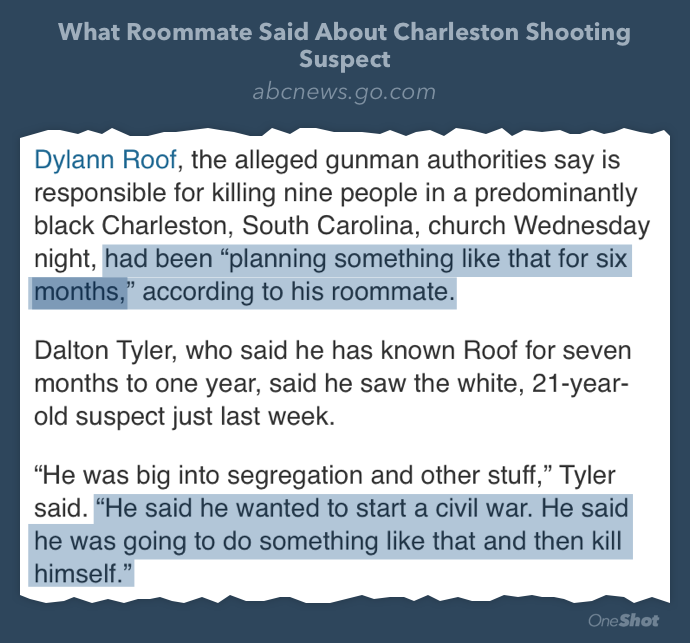
Over the past 2 weeks, many people have been looking for any other reason than racism for the murder of 9 black churchgoers in Charleston, South Carolina, by a white man known for his love of the Confederacy and segregation. Instead of focusing on the racial hatred he harbored and why he did so, instead of looking at his family and friends who must have stoked these fires, instead of investigating any organizations he belonged to or looked up to, instead of questioning roommates and friends about why they thought it was acceptable for someone to make plans for a civil war, we jump to the typical, tired talking points:

There's too many/not enough guns in this country.
Yes, guns are a big issue. I'm clearly on the side of having less weapons, but many people I respect disagree. The real issue is that people who don't value all human lives are always the loudest, making it impossible to have a reasonable discussion by blaming the victims for not having guns. Dylann Roof got a gun as a gift from his father. In most states you don't need any background check for private sales or gifts. That's a problem.

It's mental illness. 
Also a big problem, but not in this case. Racism is not a mental illness. It is a learned behavior. It is ignorance and hate. Most people with mental illnesses don't act out violently. Granted, most racists don't act out violently on their racism either. Nowadays, many racist acts are very subtle; casual racism is the dominant form. Something as simple as sharing a meme or liking a post on Facebook can be an act of racism. As President Obama himself said, it doesn't take saying "nigger" to be racist, despite what Georgia high school principals would have you believe. When racism is blatant and acted upon, it may look like crazy behavior to non-racists or even latent-racists, but it is not a mental illness.

Embedded image permalink
It's a hateful, learned behavior with deep, horrific roots.


It's the drugs we use to treat mental illness. 
Ok, this theory is only coming from Rick Perry, and I normally wouldn't entertain anything he says, but the man was elected governor of a very populous state several times, and he has decent support for his Presidential campaign, so his ideas are not isolated to his puny armadillo brain.

Guns and mental illness, more specifically our ridiculous access to guns and our piss-poor treatment of mental illness in this country, are definitely problems that need solutions. But the issue here is race. We have never honestly dealt with race in this country. I don't know if we ever will, but this one time it would be great it we tried. I'm going to anyway.

Another white male to the rescue!

I believe in the power of symbols. When people (or entire states) glorify a symbol that is historically associated with hate, I associate those people with hate.

The license plate, not the Hyundai symbol. Then again...damn it, I need a new car now. 


I believe in the power of words. When somebody says hateful things, I believe that person to be hateful.


The roommate is also quoted as saying that Dylann didn't often make racist statements, but he told a lot of racist jokes. Pro-tip: If a person constantly makes racist jokes, they are probably racist. Oh, also, if they say they want to kill black people and start a civil war, THEY ARE PROBABLY RACIST!

The immediate descriptions of Dylann included "quiet" and "shy," the mandatory words used for white mass murderers. That and "mentally ill" of course. It took Twitter and independent media outlets to finally get the discussion focused more on his blatant racism. The fact that photos like this surfaced definitely helped:


Because he surrounded himself with the Confederate flag, and because of the power and importance of symbols, the discussion then focused on why the Confederate flag still flies in so many states. That's an important discussion to have, and thankfully, it seems as if the flag flying at the South Carolina Capitol building might finally come down soon. Not soon enough.

Embedded image permalink
This is the casket of Rev. Pinckney, murdered by Roof. This is shameful.

The conversation about the traitorous, hateful flag is necessary, but it also allowed mainstream media to avoid talking about the more complex realities of systemic racism.

Then again, it led to this image...

Systemic racism is ingrained into the foundations of our society and we see its effects played out in the real estate market, the justice system, education, and basically every major institution in America. That is what people are referring to when they say "whiteness" or "white privilege." It doesn't mean that white people don't have our own struggles and nothing shitty happens to us, it just means we get the benefit of the doubt in many situations that affect our chances to succeed. We are more likely to get a job with a "white" name. We are more likely to get a fine or community service rather than prison time. And on and on.

It's possible (and common) to not even be aware of the benefits of whiteness and systemic racism and still receive those benefits. Individual racism is a little easier to spot. Systemic racism fuels individual racism; people absorb racist views from the society in which they live. Family, friends, teachers, classmates, neighbors, the media, music, sports. All of it informs our views. What was Roof learning at home? We know that his father gave him a gun as a present. Did his parents know about his affection for the Confederate flag? What was he learning from his friends? We know many people heard him talk openly about his ideas of segregation and killing blacks and didn't think much of it. What was the community teaching him? Well, we know that South Carolina has a bit of a...sordid relationship with race.

In addition to the horrifying fact that some of their recent politicians have ties with the Klan (or its PC reincarnation, the Council of Conservative Citizens) there is also the fact that South Carolina has 16 certified white supremacist groups. We know this because they all came out to denounce the actions of Roof. According to them, they had absolutely no connection to, or responsibility for, the crazed gunman; however, they want everybody to know he had some really cool ideas and legit grievances.

That's the community in which Dylann Roof was raised. He comes from a place where a racist judge remains on the bench and starts a hearing with a plea for the well-being of the killer's family.

He comes from a community where a black church that was once burned down after a slave tried to revolt stands on a street named after staunch defender of slavery.


He comes from a country where at least 5 black churches have burned down since the shooting.

Roof comes from a community where a white police officer shot a man in the back 8 times and would have gotten away with it if not for a random cell phone video uploaded to the internet. That same police officer is currently in the cell next to Roof.

That's right. The cop who shot Walter Scott in the back is in the cell next to the Charleston terrorist.

This is South Carolina. This is America.

The history is ugly, and painful, and it's all coming to the surface because we have never properly dealt with it. (I should add here that plenty of people have talked about it, more brilliantly than I could hope to, but as a society we refuse to adequately address these issues.) Instead, we attempt to ignore the problem, while naming streets and erecting statues to honor Confederate soldiers, claiming its to honor the heritage of the South. Unfortunately, that particular heritage is racist and hateful. There are many things the South should be proud of, the Confederacy is not one of those things. The statue of John C Calhoun, pro-slavery politician and all around horrible person, stands in the heart of the city. It was erected during the Jim Crow era, so blacks in the city could do nothing to prevent it. Meanwhile, proposed memorials to slaves have always been met with massive resistance. Odd that they are so willing to honor one side of their heritage and not the other.

Similarly, the Confederate flag, which was largely retired to museums after the Civil War (because they lost and most of the actual soldiers accepted it) regained popularity in the late 1940s and early 1950s as a symbol of opposition to the rising Civil Rights Movement. It was a sign of open defiance to the idea that all people are equal. So no matter how you personally want to define the flag, it represents hate.

The group that helped revive the flag, the States' Rights Democratic party, was led by Strom Thurmond, who ran for President in 1948. "States' rights" is often code for wanting to legally treat minority groups like shit. Politicians are already reverting to the states' rights argument to defend the use of the flag; watch how many use the same argument to deny gay people their rights now that the Supreme Court declared gay marriage legal.

Ironically, South Carolina State Senator and Strom Thurmond's own son wants to take the flag down. When Strom Thurmond's kin can no longer defend the flag, it's time to remove it.

Yet that is only one small step to the larger goal of equality for all. When prominent white voices proclaim angrily that racism doesn't even exist anymore, it is clear just how difficult that goal will be to reach.

It's a popular theory that the younger generations will be automatically less hateful. Dylann Roof put an end to that myth. There is still a need to actively educate the youth about past and existing inequalities in order to battle the misconceptions and misinformation passed down from older generations and currently being spewed on major media outlets. Roof became radicalized and obsessed with the idea that black people are ruining America and need to be taken out after the Trayvon Martin case. The death of a black 18 year old at the hands of a white/hispanic man and the complete acquittal of said white/hispanic man convinced a young white man that blacks are dangerous and need to be "put down."

That is the psychosis of white supremacy. The very idea that a young black man's life mattered enough to be in the news and in social media for an extended period of time, and the fact that he was occasionally portrayed sympathetically, was enough to threaten his sense of superiority. This is the same mentality that led to the increase in the number of domestic terrorist groups and white supremacist groups (often the same thing) immediately after Obama's election. Any progression towards equality is perceived as a threat from those who benefit from the status quo. It's a mentality that believes brown skin foreigners are a bigger threat to the US than white US citizens when the exact opposite is true. It's a mentality that accuses Obama and liberals of taking away guns while ownership and sales have steadily risen since Obama took office.

There is a theory that a black kid started dating a girl Dylann Roof liked and that set him down the path of hatred. His feelings of rejection mixed with inferiority made him search out a villain. In America, there's no more typical villain than black men. Trayvon had recently become a powerful symbol of an unjust justice system, but Roof knew he was really just a thug who got what he deserved. The black guy who took his girl was probably just like Trayvon. Once he gave credence to those feelings, there were plenty of people willing to encourage him.


Everybody needs to come to terms with their own identity. Some people accept their heritage, some people reject it. As white people in America, even if we never personally oppressed anyone and our ancestors never owned slaves, we have benefited from white privilege. We need to understand and accept that. It's nothing to feel guilty about, it's just a matter of life in America. Benefiting from white privilege doesn't make you racist, but denying it does. Unfortunately, some white people are defensive about the idea that they benefit from anything, which leads to this idea that they are the ones being persecuted whenever the idea is brought up. Giving up the status quo is a scary thought. A large part of their identity is built upon the fact that whiteness is inherently superior. Poor whites are often the ones most resistant to this idea of white privilege because they don't see the direct benefits. However, those same poor white people are the ones fighting against minority groups (blacks, gays, immigrants) receiving equal rights. That's white fragility. This white fragility manifests in many ways. It can be claims of reverse racism or as simple as tuning out of the conversation of race entirely because it is uncomfortable. It can also manifest in dangerous ways if given the right (wrong) motivation and in the right environment, as seen with Roof.

All white individuals are not a problem, whiteness is a problem. The whiteness inherent in denying the existence of a problem. The whiteness inherent in being safely detained and given a proper trial for murdering 9 black people versus being choked to death on the street for selling cigarettes.

Dylann Roof wanted to start a race war because he was afraid of blacks taking over the country. This idea, this fear that blacks are going to rise up and kill whitey is nothing new. This was the exact plot of Birth of a Nation in 1915, and this mentality is still pervasive in many parts of the country (and in many media outlets) in 2015.  The number of groups coming to the defense of Dylann's views, making sure that his "important" ideas are not lost in the tragedy, is frightening. They continue to warn about a race war, but the only people who want a race war are racist whites who can't come to grips with a changing reality.

There will never be a race war because, as Rachel Dolezal proved (despite how awful she is as a person) race is a social construct and fluid. Which side will multiracial people be on? Which side will Eminem be on? Which side will Asians and Latinos be on?

Race is a social construct that has real effects on people's lives. Facing it head on is how we deal with it. Acknowledge your privilege as a white person. Acknowledge the realities of racial disparities. When black people protest with #BlackLivesMatter, resist the urge to reply back with #AllLivesMatter. You are silencing an oppressed minority group, which is the problem in the first place. Yes all lives matter, but historically and currently, it has been proven time and time again that black lives don't matter as much as white lives in this country. Raising black people up, or any people of color, is not taking white people down. It is lifting everybody up. When I see my black or Latino or Asian brothers and sisters being treated poorly, it doesn't improve my status because I'm white. It lowers my status as a human being.

Acknowledging whiteness and the negative effects of whiteness does not implicate every white person. If and when a civil war does break out, it will be about principles. One side's principles include freedom and equality for all, the other side's principles focus on the superiority of a few. The sides are largely divided by race, but there are plenty of minorities who will fight for a racist, oppressive establishment. Many Polish Jews helped the Gestapo round up other Jews. African slaves in America did the same for their slavemasters. Harriet Tubman always said she would have freed thousands more if only they wanted to free themselves. That is the power of the establishment. And it works the other way, too. In any fight for equal rights, the Civil Rights Movement, the Gay Rights movement, there are always people from the oppressive majority group that break rank and fight for equality for all. Many white people gave their lives in the Civil Rights Movement. Many straight people put their lives and careers on the line for the Gay Rights Movement. It's a matter of principles, not what you look like or who you sleep with.

I'm a straight, white, 35 year old man from a middle class family and I recognize that I have benefited from all of those aspects of my identity. I recognize injustices towards minority groups exist and I stand for equal treatment of all races, classes, genders and sexual orientations.

What do you stand for? Now is a good time to decide.

I Love You All...Class Dismissed. 

Wednesday, December 24, 2014

A Troubling New Perspective on Die Hard

Yippee ki yay motherfuckers, it's an obligatory Christmas movie post! Might as well talk about the greatest Christmas movie of all time: Die Hard!


I love this movie. You love this movie. We all love it so much we labeled it a Christmas movie just so we could watch it every year. Killing Germans who unexpectedly come into our building just really puts us in the holiday spirit! Careful Mr. Claus!

After sitting through mandatory viewings of all the lesser Christmas movies out there (read: all of them except Christmas Vacation which is in its own separate league) I finally got around to watching Die Hard the other day, and something was a little...off. In light of certain recent current events, the movie took on a whole new tone. In fact, halfway through I started to think that it was just a police propaganda film. When it was over, I was certain of it.

Now, there's a fair share of things we partake in as a society that can be considered police propaganda when analyzed deeply (and cynically) enough. The childhood game Cops and Robbers is nothing more than early training for future criminals and enforcers of the law. Officer Friendly used to be a staple in elementary schools across the nation, forcing the image of the friendly neighborhood police officer down our young throats. The "super cop" has been a movie trope for as long as there have been movie tropes. COPS was one of the most popular tv shows ever created, and it's still running, with a whole cadre of spinoffs in which the audience views all events from the perspective of the law, thereby empathizing more directly with cops than ever before.

And then came John McClane, the everyday cop who rises to the occasion amid unbelievable danger.

John McClane, the cop who will always fight for the little guy. The ballsy cop who bucks authority and may even break the law himself sometimes, but always for the greater good.


More than simply empathizing with the cop, we are meant to personally relate to his blue-collar attitude and everyday nature. But that's not enough to make it propaganda. Successful propaganda can't be so direct, so there's many subtle attempts to convince the viewer of the infallibility of the police.

At one point, Holly's idiotic coworker Harry Ellis attempts to mediate between evil leader Hans and McClane for the return of the terrorists' detonators. McClane refuses to return them, causing Gruber to execute Ellis on the spot. The message here? Don't try to handle these situations on your own. Let the cops handle it.

Ordinary citizens aren't the only ones that should stay out of the way. The media needs to stay out of police affairs, too. The media is the go to excuse when people with authority are caught up in scandals. There are legitimate concerns about something a police officer or department has done? Blame the media for sensationalizing the story. Represented by the most punchably-faced man in cinematic history, the media in Die Hard is consistently shown as untrustworthy and we are meant to despise everything about it. Holly eventually punches the reporter in the face for revealing McCane's identity and we cheer, all because he had the nerve to do his job and report on the biggest story of the year.

Then there's the commentary about the ineptitude of federal government agencies. There is a long running trope of local cops distrusting federal agents and disliking when the federal government impedes on their jurisdiction, something we have seen play out in real life lately as well.  The FBI agents (Johnson & Johnson) are arrogant and fatally incompetent. They take over the operation and are immediately blown up in their own helicopter, all because they didn't listen to McClane and his new partner, local cop Al Powell. Again, the message is to stay out of the way and let the local cops do whatever they have to do.

Of course, a more sinister message lies underneath it all: the cops will let people die for their own benefit.

McClane's questionable tactics aren't the biggest issue in this movie, though. No, that would be our buddy, the twinkie loving beat cop, former neighbor to Urkel, and only guy on McClane's side through the whole ordeal: Al, the magical black friend. Turns out, Al is on desk duty because of a little accident on the job. That accident? I'll let him tell it:

John McClane: Hey pal, you got flat feet?

Sergeant Al Powell: What the hell you talking about, man.

John McClane: Something had to get you off the street.

Sergeant Al Powell: What's the matter? You don't think jockeying papers around a desk is a noble effort for a cop?

John McClane: No...

Sergeant Al Powell: I had an accident.

John McClane: The way you drive, I can see why. What'd you do? Run over your captains foot with the car?

Sergeant Al Powell: I shot a kid. He was 13 years old. Oh, it was dark, I couldn't see him, he had a ray gun, looked real enough. You know when you're a rookie they can teach you everything about being a cop, except how to live with a mistake. Anyway, I just couldn't bring myself to draw my gun on anyone again.

John McClane: ...Sorry man.

Son of a bitch.

How could you Mr. Winslow?

I never noticed how truly strange this scene was until now. It is meant to solidify the bond between the two cops and build sympathy for Al, but now it feels disturbingly prescient. Somber music plays while they talk, helping the audience truly feel the pain in Al's heart. He's torn up about the incident, and now he's stuck doing desk duty, too traumatized to use his gun.

A child is dead, the killer faced no charges, and we are forced to empathize with the killer. Maybe the department had to pay out a settlement to the family, but who knows? That's not important, what's important is that a good cop is stuck behind a desk unable to shoot anybody else. Forget about the dead kid, feel sorry for the poor cop.

Meanwhile, that cop is free to work and love his wife and eat his armful of fucking Twinkies.

After Hans falls to his death and McClane saves the hostages, he finally meets his new pal Killer Al in person. As they crush on each other, the giant, invincible blonde terrorist Karl busts out of the building, ready to kill everybody. Luckily, our buddy Al heroically pulls his gun and shoots him dead. He can kill again! He is a hero, and our knowledge of his tragic history turns a typical action sequence into an intensely emotional experience for the audience.

Growing up, movies like this inspire us to blindly root for cops, thinking they can do no wrong. Cops who "write their own rules" and go "above and beyond" like John McClane or Mike Lowrey are even better. Their actions may be technically illegal, but they get the job done. The ends justify the means because police always have the best interests of the community in mind. Unfortunately, the reality is that although police are important to society and are largely under-appreciated for the jobs most of them do, there is a pattern of abuse that needs to be addressed.

In the end, I'm just glad nobody shot Argyle when he busted through the gates in the limo.

It's a good thing he had a friend to vouch for him.


I Love You All (Even John McClane, Still)...Class Dismissed.