Part 1 of this post appears here on 90s Hip Hop Junkie dot com.
Part 2 appears here.
Despite what Sprite tried to tell us, when it comes to hip hop, image has always been important. Fashion and hip hop have gone hand in hand since the very beginning. The Kangol and the Adidas track suit were almost a requirement in the late 70s and early 80s.

Nowadays, rappers hardly spit a verse without mentioning their favorite fashion designer, or their own fashion label. Or they name themselves after their favorite fashion designer.

In return, marketing companies use hip hop slang or fashion to target the youth (to various degrees of success). It's safe to say fashion and hip hop have maintained an intimate connection.
Early on, a lot of hip hop fashion followed in the steps of disco fashion, which...wasn't great. Dre may be a billionaire, but he'll still never live down the style choices of his first group.

In the 80s, when rappers realized they needed to do something to separate their image from that of the coke fueled disco era, most of hip hop fashion followed the b-boy style. This was much more suited to the target demographic and the participants. Hip hop wasn't for the disco clubs, it was for the streets, the neighborhood and basement parties. So track suits, Kangols, shell toes, Chuck Taylors, and Gazelles were the wave. If you were a dancer, maybe you rocked a headband. Someone in the crew was definitely carrying a giant boombox.
Then, when Run DMC dropped "My Adidas" in 1986, the fashion world, and the world at large, realized the influence rap could have on the consumer public. Adidas sales went through the roof after the song hit the airwaves. And rappers realized the importance of style in creating their own identities. Run DMC never wore another sneaker at a performance.

As hip hop spread across the country, different regions expanded on the sounds and the styles of early rappers. The West Coast Gangsta aesthetic (Khakis, Chuck Taylors, plaid shirts over white tees, bandanas) became popular. The East Coast B-Boy became more rugged, with dark, baggy clothes and winter gear (skullies, boots, hoody). The 90s is a heralded era in hip hop, and it still remains influential to the sound and style of modern rap. The nostalgia centered on the era is almost as much about the fashion as the music.
Converse, Adidas, Reebok, and even Puma were the main sneaker brands among urban youth until Nike and Jordan came along. Throughout the 90s, Nike dominated with basketball sneakers and cross trainers. Besides Jordans, two of the most popular sneakers were the Bo Jacksons and the Charles Barkleys.


Reeboks had the Classics and the Pumps, then the Shaq Pumps, which required actual tools to use.

There were the incredibly heavy Ewings...

And the obnoxious LA Gear and La Tech/LA Lites...

As well as British Knights and their BK Ratch Tech...

Fila even had a moment on top with Grant Hill's and Jerry Stackhouse's signature shoes.


For leisure wear there were Hush Puppies, or Clark's Wallabees, which could be self-customized of course. Clark's finally decided to work directly with the Wu earlier this year.
For jackets, there were the Avirex bombers, or the Double Goose...

Or the 8ball jackets for the ultra cool...

Of course, everyone had Starter. Either the regular jacket...

The hoody with the full zipper...


Bonus points for Raiders, Bulls, UNLV, Hornets, or any other 90s expansion team.
Hoodies are a vital aspect of any Hip Hop Head's wardrobe. Starter had the jackets on lock, but Champion had the best hooded sweatshirts. Rugged outdoor gear was always popular on the East Coast, and brands like Timberland, Carhartt, Northface, Gortex, even Columbia all benefited.
For clothes in general, Tommy Hilfiger, Nautica, Polo, Karl Kani, Guess, Pelle Pelle, South Pole, Ecko, were all popular. These brands benefited from their association with hip hop but didnt necessarily acknowledge it. Then more brands with a specific "urban" focus came out, many under the direction of hip hop moguls. Russell Simmons had Phat Farm. Puffy had Sean John. Jay Z had Rocawear. Wu Tang had Wu Wear. At some point, rappers got into more designer brands like Moschino, Versace, Gucci, DKNY, and, because of Biggie's sweater, Coogi.

Much of hip hop fashion comes down to what brands are hot at the time, and that can change quickly. Rocking Fubu or Sean John in the 90s was cool, but if you were still rocking them in the new millenium, it was assumed you got it on clearance at K-Mart.
The most quintessential 90s brand has to be Cross Colours. It was based in South Central, and their tagline was "clothing without prejudice" in an effort to spread social awareness at a time of high violence, AIDS, and racial tension. At its height of popularity, people like Arsenio Hall and the characters on A Different World wore it.

Part 2 appears here.
Despite what Sprite tried to tell us, when it comes to hip hop, image has always been important. Fashion and hip hop have gone hand in hand since the very beginning. The Kangol and the Adidas track suit were almost a requirement in the late 70s and early 80s.
Grandmaster Flash
Gucci Mane
In return, marketing companies use hip hop slang or fashion to target the youth (to various degrees of success). It's safe to say fashion and hip hop have maintained an intimate connection.
Early on, a lot of hip hop fashion followed in the steps of disco fashion, which...wasn't great. Dre may be a billionaire, but he'll still never live down the style choices of his first group.

2 years before NWA.
In the 80s, when rappers realized they needed to do something to separate their image from that of the coke fueled disco era, most of hip hop fashion followed the b-boy style. This was much more suited to the target demographic and the participants. Hip hop wasn't for the disco clubs, it was for the streets, the neighborhood and basement parties. So track suits, Kangols, shell toes, Chuck Taylors, and Gazelles were the wave. If you were a dancer, maybe you rocked a headband. Someone in the crew was definitely carrying a giant boombox.
Then, when Run DMC dropped "My Adidas" in 1986, the fashion world, and the world at large, realized the influence rap could have on the consumer public. Adidas sales went through the roof after the song hit the airwaves. And rappers realized the importance of style in creating their own identities. Run DMC never wore another sneaker at a performance.

And Adidas released Run DMC sneakers, coming full circle.
As hip hop spread across the country, different regions expanded on the sounds and the styles of early rappers. The West Coast Gangsta aesthetic (Khakis, Chuck Taylors, plaid shirts over white tees, bandanas) became popular. The East Coast B-Boy became more rugged, with dark, baggy clothes and winter gear (skullies, boots, hoody). The 90s is a heralded era in hip hop, and it still remains influential to the sound and style of modern rap. The nostalgia centered on the era is almost as much about the fashion as the music.
Converse, Adidas, Reebok, and even Puma were the main sneaker brands among urban youth until Nike and Jordan came along. Throughout the 90s, Nike dominated with basketball sneakers and cross trainers. Besides Jordans, two of the most popular sneakers were the Bo Jacksons and the Charles Barkleys.

Bo knows 90s color schematics.

Reeboks had the Classics and the Pumps, then the Shaq Pumps, which required actual tools to use.

Save up for those CO2 cartridges, kids!
There were the incredibly heavy Ewings...

And the obnoxious LA Gear and La Tech/LA Lites...
As well as British Knights and their BK Ratch Tech...

Fila even had a moment on top with Grant Hill's and Jerry Stackhouse's signature shoes.


For leisure wear there were Hush Puppies, or Clark's Wallabees, which could be self-customized of course. Clark's finally decided to work directly with the Wu earlier this year.
For jackets, there were the Avirex bombers, or the Double Goose...

Or the 8ball jackets for the ultra cool...
And Puddy.
Of course, everyone had Starter. Either the regular jacket...
The hoody with the full zipper...
Or the pullover hoody...

Hoodies are a vital aspect of any Hip Hop Head's wardrobe. Starter had the jackets on lock, but Champion had the best hooded sweatshirts. Rugged outdoor gear was always popular on the East Coast, and brands like Timberland, Carhartt, Northface, Gortex, even Columbia all benefited.
For clothes in general, Tommy Hilfiger, Nautica, Polo, Karl Kani, Guess, Pelle Pelle, South Pole, Ecko, were all popular. These brands benefited from their association with hip hop but didnt necessarily acknowledge it. Then more brands with a specific "urban" focus came out, many under the direction of hip hop moguls. Russell Simmons had Phat Farm. Puffy had Sean John. Jay Z had Rocawear. Wu Tang had Wu Wear. At some point, rappers got into more designer brands like Moschino, Versace, Gucci, DKNY, and, because of Biggie's sweater, Coogi.

Much of hip hop fashion comes down to what brands are hot at the time, and that can change quickly. Rocking Fubu or Sean John in the 90s was cool, but if you were still rocking them in the new millenium, it was assumed you got it on clearance at K-Mart.
The most quintessential 90s brand has to be Cross Colours. It was based in South Central, and their tagline was "clothing without prejudice" in an effort to spread social awareness at a time of high violence, AIDS, and racial tension. At its height of popularity, people like Arsenio Hall and the characters on A Different World wore it.
Mark Wahlberg AND the Funky Bunch even wore it.
And I don't think anyone has worn it since January 1st, 2000. The brand seemingly evaporated with the end of the 90s.
"Keeping it real" was always been an important ethos in rap, so you were better off getting a shitty brand than a knock off. You could pull a Biggie and sew alligators on your shirt, but don't let them see the inside. You never wanted to get caught wearing the bootleg joint.

It was never all about brands though; how you rocked it was always as important. Would Adidas have looked so cool if Run DMC tied their laces like most people? Or if they were wearing corduroy pants? The coolness of the style depended on the person rocking it. If Run DMC was making electro synth dance music like Dre's World Class Wrecking Crew, that would have definitely affected people's perception of their fashion. But when you mix the no laces Adidas with the all black outfits and dooky rope chains, and you add the hard rock chords over the thumping bass with DMC's booming voice and Run's energy, you get fashion and music icons.
So things like overalls became popular for a while, and it didn't matter what brand they were, it just mattered whether you were rocking one strap or two and what was on underneath.

Fitted hats didn't have to be Starter of New Era (it helped) they just had to be worn properly. Backwards, slightly to the side, straight up with a small curve in the brim, or no curve and worn over a bandana or durag.

Karl Kani and Guess jeans were some of the most popular, but Levis or even Old Navy were fine if they were baggy enough. Nobody knew ABC's favorite brand but we knew they wore their clothes inside out. And then we all realized how "wickety wack" that was when Kriss Kross showed us how much cooler it was to rock clothes backwards.

Champion sweatpants were the best, but all that really mattered was whether you rolled up one pants leg like LL or not.

The best hip hop fashion styles of the 90s had nothing to do with brands and more to do with accessories. TLC could attach condoms to all of their clothes and look fly.


Another thing only a few could pull off was Big Daddy Kane's lines in the eyebrow. If you didn't date Madonna in her prime, you should've never even tried.

There were giant name rings...

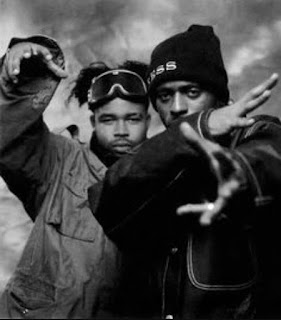
And piercings became popular, especially with the more alternative/weird rappers. Rappers and their fans started wearing earrings in both ears, in the nose, the eyebrow, or even the lip...

Of course, there were also missteps. Bleached hair really went both ways. Eminem's bright blonde hair, for better or worse, became iconic...

While others were more...moronic...

Then there were the baby binkies. Lil Mama might have been the most famous offender in the 2000s, but a lot of people who should've known better walked around chewing on these things in the 90s.

There were other missteps too, such as Hammer pants. Admittedly, I bought a pair of Skidz (not exactly Hammer pants, but basically the same) so I contributed to the problem, but if you ever wore them you know...they were comfortable as hell.

When it comes to silly but not regrettable fashion trends, there were the spray painted shirts you could get at Six Flags, or if you were lucky, a neighborhood artist. White tees with bright graffiti proclaiming your name, or your love for your girlfriend, or your dead friend's name, were everywhere, and remain a staple at fairs and carnivals across the country.
But the best t-shirt trend of the 90s were the Kriss Kross Bugs & Taz shirts, with Black Bart Simpson a close second.
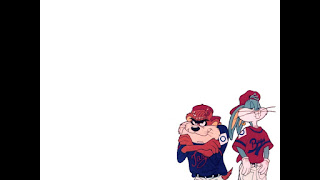

Hip hop was literally created by taking other art and making something new with it, "remixing" it, so these items were the perfect reflection of hip hop style. Everybody knew these characters, but here they were presented in a new, fresh way that resonated with a hip hop audience.
Some fashion trends are flashes in the pan (hopefully we never go back to sucking on binkies) but some leave a more permanent mark. Cross Colours perfectly reflects 90s fashion, but will never be worn again. Timberlands and will always be fashionable and forever tied to 90s NY hip hop. As a product of the East Coast, I am completely biased, but Timz & a Hoody is the ultimate hip hop outfit.
It seems most of current hip hop fashion is a variation, or remix, of 90s fashion. Some (like Lil Uzi Vert) even take from 90s grunge or metal fashion. A lot of the same brands are around, and have immersed themselves into hip hop culture even more by signing deals with rappers to promote or design their gear (Kanye with Adidas, Kendrick with Reebok, etc.). Fashion and hip hop work so well together because rebelliousness, originality, and novelty are key components, and they both can be a powerful form of self-expression. What we listen to and what we wear reflects who we are and often helps us define who we are. Plus, both art forms are always pushing the envelope with an ear to the streets for the next big thing, so it makes sense that they have become so intertwined. Thankfully, hip hop pioneers in the 80s and 90s made the fashion world take notice.
I Love You All...Class Dismissed.

As young Donald Glover reminded us in Atlanta. The 05 jerseys were hot, too.
It was never all about brands though; how you rocked it was always as important. Would Adidas have looked so cool if Run DMC tied their laces like most people? Or if they were wearing corduroy pants? The coolness of the style depended on the person rocking it. If Run DMC was making electro synth dance music like Dre's World Class Wrecking Crew, that would have definitely affected people's perception of their fashion. But when you mix the no laces Adidas with the all black outfits and dooky rope chains, and you add the hard rock chords over the thumping bass with DMC's booming voice and Run's energy, you get fashion and music icons.
So things like overalls became popular for a while, and it didn't matter what brand they were, it just mattered whether you were rocking one strap or two and what was on underneath.
To be honest, not many people could rock this combination.
Fitted hats didn't have to be Starter of New Era (it helped) they just had to be worn properly. Backwards, slightly to the side, straight up with a small curve in the brim, or no curve and worn over a bandana or durag.
Some things never go out of fashion.

Note to 13 year old self: not that cool.
Champion sweatpants were the best, but all that really mattered was whether you rolled up one pants leg like LL or not.

With or without a racing jacket.
The best hip hop fashion styles of the 90s had nothing to do with brands and more to do with accessories. TLC could attach condoms to all of their clothes and look fly.

Mary J showed that all you needed was a cap and hoop earrings to make us fall in love.
Jerseys were always dope, too. Mitchell & Ness were huge for throwback jerseys, and they're still popular, but customized jerseys and authentic jerseys from any sport were great. And then there was the jersey dress...
This happened in 2003 but I'm including it because...come on.
Bucket hats, brought back recently by Schoolboy Q and Smoke DZA, were huge for a while. Only a few people could pull them off, though.
It helps to be one of hip hop's best duos.
There were giant name rings...
Fashionable and practical.
Pharoahe Monch rocked the ski goggles far away from any slopes...

And piercings became popular, especially with the more alternative/weird rappers. Rappers and their fans started wearing earrings in both ears, in the nose, the eyebrow, or even the lip...

Of course, there were also missteps. Bleached hair really went both ways. Eminem's bright blonde hair, for better or worse, became iconic...
While others were more...moronic...
Then there were the baby binkies. Lil Mama might have been the most famous offender in the 2000s, but a lot of people who should've known better walked around chewing on these things in the 90s.

It's not your fault, Lil Mama.
There were other missteps too, such as Hammer pants. Admittedly, I bought a pair of Skidz (not exactly Hammer pants, but basically the same) so I contributed to the problem, but if you ever wore them you know...they were comfortable as hell.
Don't hurt em.
When it comes to silly but not regrettable fashion trends, there were the spray painted shirts you could get at Six Flags, or if you were lucky, a neighborhood artist. White tees with bright graffiti proclaiming your name, or your love for your girlfriend, or your dead friend's name, were everywhere, and remain a staple at fairs and carnivals across the country.
But the best t-shirt trend of the 90s were the Kriss Kross Bugs & Taz shirts, with Black Bart Simpson a close second.

This was the cover for Roc Marciano's recent EP with Knxwledge. How perfect is he?
Hip hop was literally created by taking other art and making something new with it, "remixing" it, so these items were the perfect reflection of hip hop style. Everybody knew these characters, but here they were presented in a new, fresh way that resonated with a hip hop audience.
Some fashion trends are flashes in the pan (hopefully we never go back to sucking on binkies) but some leave a more permanent mark. Cross Colours perfectly reflects 90s fashion, but will never be worn again. Timberlands and will always be fashionable and forever tied to 90s NY hip hop. As a product of the East Coast, I am completely biased, but Timz & a Hoody is the ultimate hip hop outfit.
It seems most of current hip hop fashion is a variation, or remix, of 90s fashion. Some (like Lil Uzi Vert) even take from 90s grunge or metal fashion. A lot of the same brands are around, and have immersed themselves into hip hop culture even more by signing deals with rappers to promote or design their gear (Kanye with Adidas, Kendrick with Reebok, etc.). Fashion and hip hop work so well together because rebelliousness, originality, and novelty are key components, and they both can be a powerful form of self-expression. What we listen to and what we wear reflects who we are and often helps us define who we are. Plus, both art forms are always pushing the envelope with an ear to the streets for the next big thing, so it makes sense that they have become so intertwined. Thankfully, hip hop pioneers in the 80s and 90s made the fashion world take notice.
I Love You All...Class Dismissed.


